English
 Pусский
 عربي
عربي Every morning, the shift supervisor at a mid-sized flexible packaging plant walks the production floor with the same knot in his stomach. Yesterday, the line ran a 9-micron LDPE coating on metallized PET without a hitch. Today, same settings, same resin—yet the melt curtain is waving like a flag, edge bead has crept back, and the peel strength on the latest sample barely hits 1.2 N/15mm. The operator blames humidity; the maintenance lead suspects a worn screw. The real culprit? A combination of subtle variables that many users of these lines learn to live with—but shouldn’t have to.
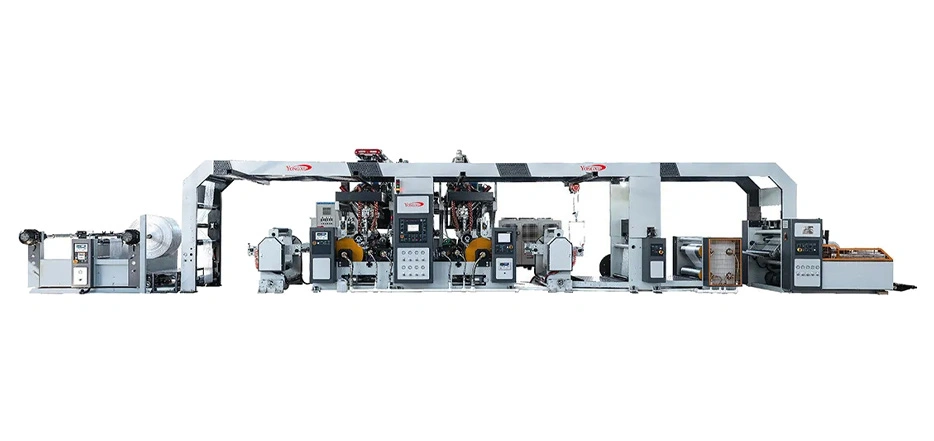
This scenario isn’t isolated. Across the converting industry, production teams face a recurring set of headaches tied to high-speed web coating and laminating. While the machinery at the heart of the process is robust in principle, real-world conditions expose persistent challenges that erode yield, waste resin, and steal capacity. Understanding these challenges is the first step toward regaining control—and that’s precisely what we’ll unpack here. For those actively evaluating a more integrated production setup, a closer look at a well-engineered coating and laminating line design can illustrate how modern configurations are tackling these pain points head-on.
Why “Stable Coating Weight” Is Easier Said Than Done
The most universal complaint on the shop floor is coating weight variation—both across the web width and machine direction. When you’re running a 15 g/m² sealant layer for a retort pouch, a deviation of just ±1.5 g/m² can mean the difference between a passing seal strength test and a batch rejection. The downstream consequences cascade quickly: delamination in the filling line, leakers in distribution, and eventually a very tense conversation with the brand owner.
The root cause is rarely a single factor. Die lip misalignment, inconsistent air gap, fluctuating melt pressure due to screw surging, and even subtle changes in the cooling roll temperature profile all contribute. Many operators compensate by overcoating—running 10–12% above target just to guarantee minimum coverage. That’s a direct hit to consumable cost. In a mid-size operation consuming 600 tonnes of LDPE annually, that kind of overcompensation can quietly burn an extra $60,000 a year in resin alone.
A practical, non-commercial approach to tackling this lies in rigorous process mapping. Plants that document the “golden window” of die gap, air gap, chill roll temperature, and line speed for each material combination—and enforce those parameters via digital recipe management—tend to see significantly narrower coating weight distributions. Some have also turned to gravimetric feeding and closed-loop gauge control, though such retrofits aren’t always cost-justified for older frames.
When the Substrate Pushes Back: Heat-Related Defects
While operators focus on the extruder, the substrate often becomes the unspoken problem. Many of today’s high-performance flexible films—ultra-thin BOPP, barrier-coated PET, bio-based PLA films—have a heat tolerance that is remarkably narrow. Apply a 320°C LDPE melt directly to an 18-micron BOPP without precise thermal management, and the result is visible: puckering, wrinkling, or in worst cases, a complete loss of barrier properties from micro-cracks in the coating.
The immediate fix on many shop floors is to slow the line. Reducing speed from 200 m/min to 120 m/min gives the substrate more time to dissipate heat through the chill roll, but it also slashes output by 40%—a trade-off that makes production planners wince. A more sustainable solution involves rethinking the thermal balance: optimizing the air gap not just for oxidation (to promote adhesion) but also for substrate cooling, using larger-diameter or internally spiral-cooled chill rolls, and deploying corona treaters judiciously without weakening the film’s heat-sensitive surface.
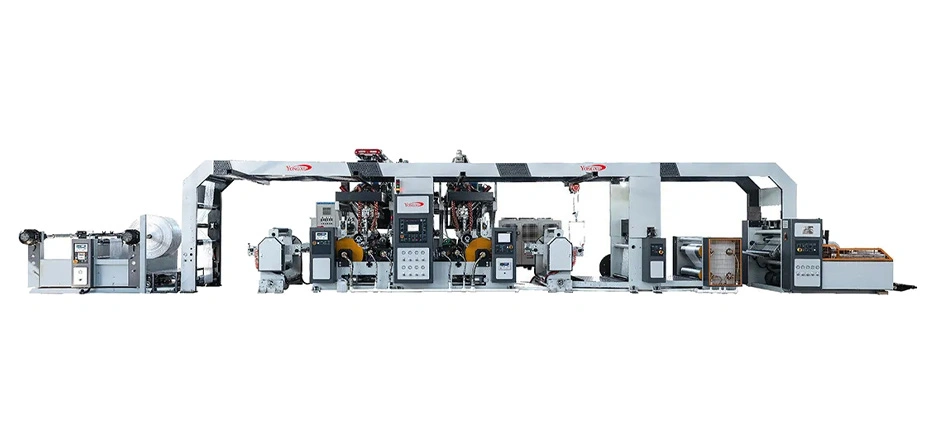
An experienced process engineer from a major converter once shared at an industry summit that their team reduced heat-related waste by 22% simply by segmenting the chill roll temperature zones and shifting the back-side cooling profile. The insight wasn’t high-tech—it was simply the result of recognizing that the cooling system must be treated as a dynamic variable, not a fixed setpoint.
The Wear Nobody Sees: Screw & Barrel Degradation
Drifting process parameters often have a mechanical ghost in the machine. Extruder screws running abrasive fillers or recycled content slowly lose their profile over months, leading to a gradual decay in melt quality. The operator notices that back pressure has trended up, melt temperature has crept, or the coating thickness profile keeps requiring automatic die adjustments to compensate. Without a scheduled screw inspection, these signals can be mistaken for raw material inconsistency.
Proactive plants use a combination of preventive maintenance triggers—every 3,000 running hours for filled resin applications, for instance—and rapid wear-assessment tools. Portable boroscope inspections and simple melt temperature stability tests can provide early warnings. One underappreciated routine: swapping the screen pack on a frequency that matches the contaminant load, not just “when it clogs.” This alone prevents unnecessary shear heating and extends the life of the screw and barrel set.
At this stage, many operations teams begin asking whether their current line architecture still matches their evolving product mix. That’s a fair question, and an advanced tandem extrusion laminating system designed for rapid product changeover may reduce the chronic wear associated with extreme processing windows.
How to Avoid Competing with Your Own Product Page
A subtle but critical challenge isn’t on the production floor—it’s in the way you think about your equipment. Maintenance teams often optimize parts of the line in isolation: the extruder, the winder, the corona treater. Yet, an extrusion coating machine is a highly interconnected system. A small tension fluctuation at the unwind ripples into the coating nip, where it alters the air gap and consequently the oxidation level and adhesion. Siloed troubleshooting can make one problem disappear while unintentionally creating another.
This systemic reality calls for a holistic view. The best-performing plants we’ve observed implement a weekly cross-functional huddle where operators, maintenance techs, and quality inspectors correlate notes—linking an uptick in unwind splice frequency to a transient loss of coating weight uniformity, for example. The result is faster root cause identification and fewer “ghost hunts.”
Building Resilience into Your Coating Operation
If there’s one takeaway, it’s that the most persistent coating challenges are rarely solved by a single component upgrade. They recede when the entire process—the mechanical, thermal, and human elements—work in concert. Here are four practical steps that consistently pay off across different plant sizes:
-
Standardize the startup sequence. Write a detailed, step-by-step startup checklist that specifies purge duration, die bolt adjustment order, and chill roll stabilization time before splicing the web. This removes individual operator variability.
-
Adopt a substrate-specific die gap matrix. Document and laminate a quick-reference card for each material family, specifying initial die gap, air gap, and temperature profile. Place it at the operator station.
-
Implement trend-based maintenance alerts. Use historical melt pressure and motor load data to trigger mechanical inspections before quality drifts. Simple trend lines in the MES or even a spreadsheet can suffice.
-
Audit your resin delivery. Inconsistent pellet temperature or moisture can quietly sabotage extrusion stability. Regularly check the resin handling system—hoppers, dryers, blending accuracy.
When It’s Time to Move Beyond Incremental Fixes
Many of the challenges we’ve explored—coating weight inconsistency, substrate heat damage, progressive wear, and systemic blind spots—are inherent to the process, but their severity is heavily influenced by the design architecture and control philosophy of the equipment in use. Incremental fixes can buy time, yet when product specifications tighten or the competitive landscape demands higher OEE, a more fundamental re-evaluation becomes necessary.
That’s where solutions designed specifically for high-barrier flexible packaging come into focus. For example, Yongxu’s high-speed laminating solutions for barrier packaging integrate closed-loop gauge control, independent chill roll temperature zoning, and quick-change die systems—features purpose-built to shrink the very process windows that cause so much pain on conventional setups. Rather than patching up an aging frame, you gain a platform engineered to hold the narrow tolerances today’s brand owners demand.
If you’re curious about the concrete specifications and how such a system would fit your current product range, you’re welcome to explore the full configuration options. No amount of troubleshooting can compensate for a machine that isn’t calibrated to the task—and recognizing that is often the first real step toward leaving daily production battles behind.
Disclaimer: This article draws on widely observed industry practices and general engineering principles. Equipment specifications and process parameters should always be validated by qualified engineers against the specific requirements of your products and materials. References to standards such as ISO 23559 (Plastics — Film and sheeting — Guidance on testing of film and sheet for extrusion coating) can serve as general guidance.