Early on a Monday morning, a woven bag plant in central Vietnam received two calls. One client urgently needed cement bags made from high-denier PP tape; the other wanted a run of lightweight, breathable fruit sacks. The production schedule was already tight. The crew started retooling the line on Tuesday — changing the reed, adjusting the weft insertion timing, re-tensioning creels. By Friday afternoon, the second order was barely shipping. The delay cost them a repeat order and threw the entire month’s production planning off balance.
Scenes like this are multiplying across the textile supply chain. Where factories once ran a single fabric style for weeks, they now face fragmented demand: shorter runs, mixed specifications, and lead times that compress every quarter. A 2024 survey by the International Textile Manufacturers Federation noted that 64% of technical fabric producers saw an increase in orders with a delivery window of under two weeks, forcing production managers to rethink how they allocate capacity.
The hidden bottleneck is not speed — it’s rigidity.
Why dedicated machine setups are becoming a liability
Most legacy weaving lines were built for volume, not variety. They are optimized around a narrow band of fabric parameters: a specific weave pattern, a fixed range of tape widths, a predetermined number of shuttles. When a new order arrives that falls outside those parameters, the only option is a lengthy mechanical changeover.
Consider what actually happens during a typical product switch:
-
The reed must be swapped to match the new fabric density.
-
The cam arrangement, which controls shed timing, may need reconfiguration — often requiring partial disassembly.
-
Warp beam tension profiles need recalibration, especially if the new tape material has different elongation characteristics.
-
The take-up roller speed ratio must be adjusted to achieve the correct stitch length.
In a non-modular machine, these steps are sequential, deeply interdependent, and entirely manual. Maintenance logs collected by several Southeast Asian bag converters show changeover times ranging from 6 to 12 hours for a single line. Over a month, those hours can eat up 15-20% of available production time — a figure that directly nibbles at gross margin.
How modular design turns hours of changeover into minutes
The engineering answer to this rigidity is modular architecture, a concept that has transformed industries from automotive assembly to consumer electronics and is now reshaping woven fabric production.
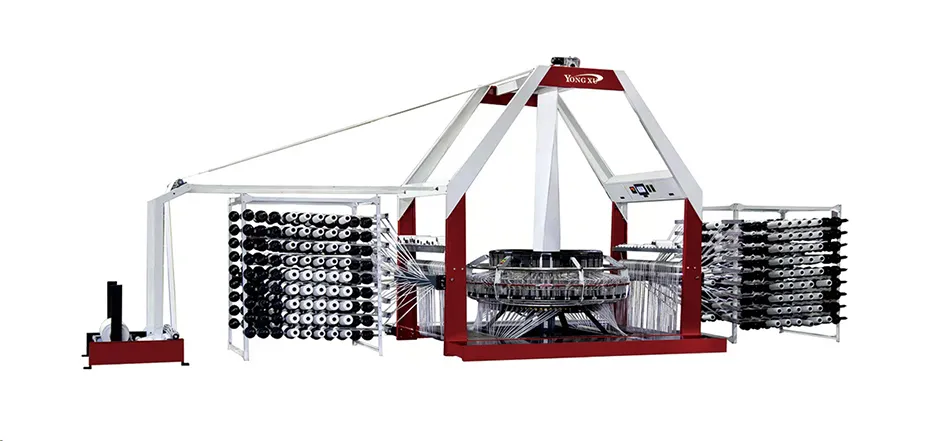
A modular platform is built around interchangeable, pre-aligned subassemblies. Instead of tearing down the shed formation system, an operator swaps a pre-configured cam cassette — a process that takes under ten minutes. Instead of rethreading the entire weft insertion path, a quick-release shuttle guide module slides into place. The creel section, often a major source of downtime during material changes, can be decoupled and reconfigured offline while the main line keeps running.
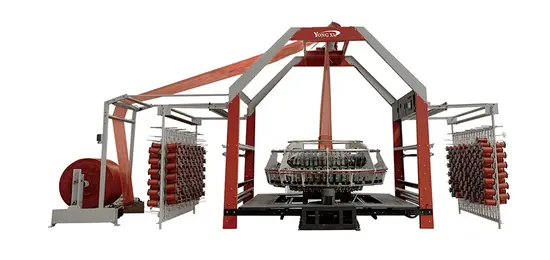
The operational impact is measurable. A technical textile mill in Gujarat, India, documented its changeover data before and after adopting a modular weaving platform (not limited to one brand; data was shared as part of an industry benchmarking exercise):
| Changeover Task | Traditional Fixed Machine | Modular Platform |
| Reed replacement | 90 minutes (including re-alignment) | 25 minutes |
| Cam set reconfiguration | 180 minutes (partial disassembly needed) | 12 minutes (pre-set cassette swap) |
| Warp beam tension recalibration | 60-90 minutes of trial-and-error | 15 minutes (pre-stored digital recipe) |
| Total line downtime per switch | 7-9 hours | Under 1 hour |
The factory reported that its production line utilization rate rose from 72% to 91% across a quarter, almost entirely driven by reduced changeover downtime.
If you are evaluating whether such agility is achievable with your current product mix, explore modular weaving equipment that supports rapid product changeovers. The principle applies whether you are running flat, tubular, or leno fabric constructions.
The four modular subsystems that matter most for fast switching
Not all “modular” claims are equal. When assessing whether a weaving system can genuinely handle quick fabric transitions, pay attention to four specific subsystems:
-
Shed formation module. This is where the weave pattern lives. A true modular system uses interchangeable cam boxes or servo-driven actuators that can store multiple shed profiles. Switching from a plain weave to a twill or satin weave should be a configuration change, not a mechanical rebuild.
-
Weft insertion cassette. Different tape widths and material stiffness require distinct shuttle paths and tension compensation. Pre-tuned insertion cassettes — often color-coded by application — eliminate the need to re-set timing and brake pressure with every batch.
-
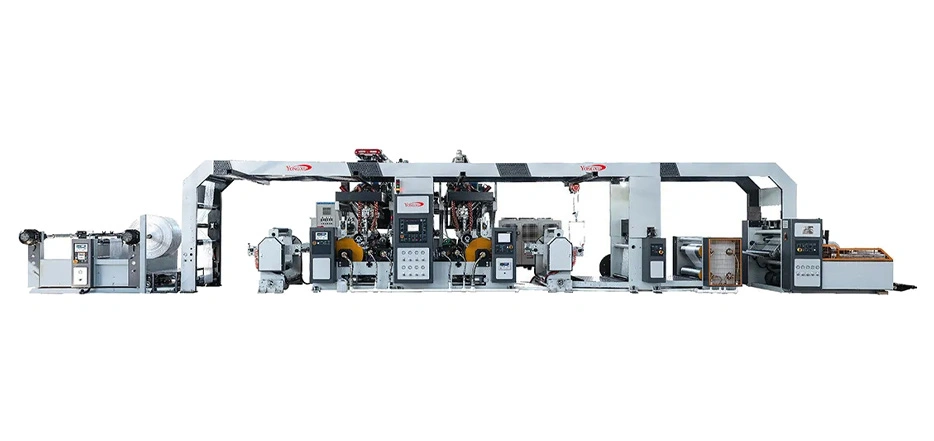
Take-up and winding unit. Fabric stitch length and roll density change with each product. A modular take-up assembly with quick-couple gearing lets operators adjust the draw ratio without touching the main transmission. Some designs even allow hot-swapping the winding mandrel for different core diameters.
-
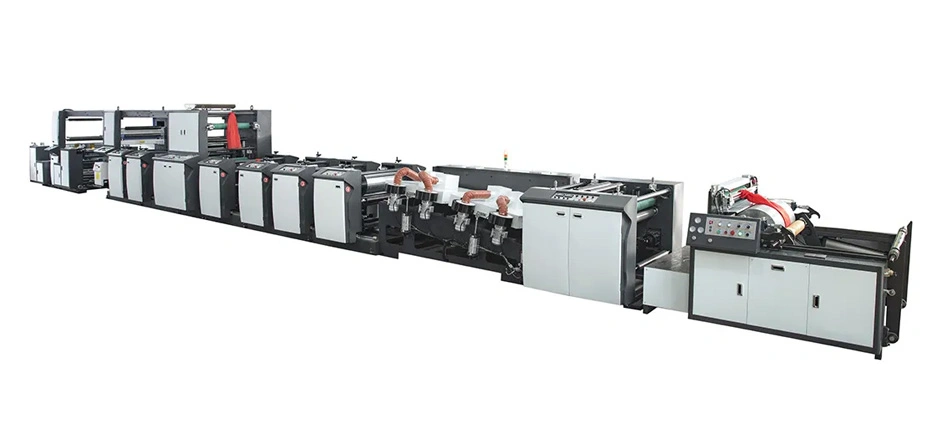
Control architecture. Fast mechanical changeover only helps if the machine’s control system can recall the right parameters instantly. Look for platforms that store digital “recipes” — tape width, weave density, tension curve, production speed — and load them via a single interface. This cuts the time spent on trial runs and sample approvals significantly.
Where the real money gets saved: small-batch economics
Quick changeover is not just an engineering comfort — it changes the factory’s commercial equation. When switching takes an entire shift, small batches (below 10,000 meters, for instance) become unprofitable because the downtime cost exceeds the margin on the order. Plants are forced to either reject short-run business or accumulate inventory they cannot sell.
When changeover time drops below 30 minutes, the breakeven batch size shrinks dramatically. Suddenly, a 5,000-meter trial order for a new customer becomes profitable. The factory can take on seasonal demand spikes, promotional packaging runs, and even competitor-overflow jobs without disrupting its core high-volume contracts.
One packaging supplier in Poland used this logic to develop a “rapid response” service line: it guarantees delivery of customized woven bags within five working days by running small batches between its standard mass-production slots. The service now accounts for 18% of its revenue and carries a 22% price premium — a margin structure only possible because changeover costs were engineered out. For a closer look at how this plays out with the right equipment configuration, see how Yongxu’s quick-change weaving solutions handle multiple fabric types.
Building a switch-ready factory floor without buying extra machines
A common response to product variety is to dedicate a separate production line to each fabric type. That approach works for stable, high-volume demand. But it comes with heavy capital expenditure, more floor space, more operators, and higher maintenance overhead.
Modular design offers a different path: one line that acts like many. By investing in changeover speed rather than redundant capacity, a factory can serve a wider product portfolio from the same asset base. This capital-light flexibility is especially valuable in emerging markets where financing is tight, or in developed markets where floor space is expensive and skilled labor is scarce.
The shift in thinking is subtle but powerful: treat changeover time as a design parameter, not a fixed constraint. Production managers who begin specifying “maximum changeover time” alongside “output per hour” in their equipment requirements often discover they can meet their volume targets with fewer machines — and fewer headaches.
What to look for when evaluating modular equipment
If you’re benchmarking systems, a few practical checks can help separate genuine modularity from marketing language:
-
Ask for a live changeover demonstration. Watch a technician switch from one fabric specification to another. Time it. Count the tools used. A genuinely modular system should require no more than a hex key and maybe a torque wrench.
-
Check how recipe data moves. If you already use an MES or ERP system, the weaving line’s control should import and export parameter sets digitally. Re-entering 40 parameters by hand defeats the purpose of a quick changeover.
-
Look at the warranty terms on quick-wear parts. Modules that are swapped frequently — cam followers, guide blocks, shuttle bodies — should be covered under a realistic wear-and-tear policy. If the warranty excludes all “consumable modules,” the lifecycle cost may be higher than expected.
Bringing modular thinking into your operation
The technology is only part of the story. The most successful implementations pair modular equipment with a few operational habits:
-
Pre-stage modules for the next job. When a production run is underway, the changeover team should prepare the cassette, reed, and tension profile for the next order. That way, the switch becomes a parallel activity, not a sequential one.
-
Standardize material interfaces. If your supplier can provide pre-aligned creel carts that fit the same docking system, swapping materials becomes a plug-and-play step.
-
Track mean-time-between-changeover. Just as maintenance teams track MTBF, production teams should track average changeover time and work to reduce it quarter by quarter. The goal is continuous improvement, not a one-time step change.
These practices multiply the gains from modular hardware and often uncover additional savings — in WIP inventory, in scrap reduction during startup, and in operator training time.
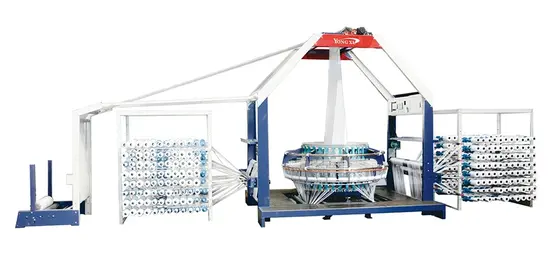
If you’re aiming for a production floor that can pivot between heavy-duty industrial fabrics and delicate consumer packaging without breaking pace, the right platform makes a tangible difference. Get to know Yongxu’s modular approach to flexible woven fabric manufacturing and see whether its specification fits your current — and future — product mix.
A final note on the bigger picture
Supply chain volatility is not an anomaly; it’s the new operating environment. Factories that embed flexibility at the equipment level are not just solving a scheduling problem today — they are building a structural advantage that lets them capture revenue streams their less agile competitors must turn away.
Quick-change modular design is not a feature. It’s a capacity strategy disguised as an engineering choice.
Disclaimer: Changeover time data cited in this article is based on publicly shared industry benchmarks and user-reported figures. Individual results vary depending on product complexity, operator skill, and factory conditions. This article does not constitute a guarantee of performance for any specific equipment brand or model. Always request a tailored assessment from your equipment supplier.